
Skip to content
HomeInsights

Insights

Ideas for building
better software.

Engineering perspectives on architecture, product development, AI, and the everyday decisions behind useful software.

From the engineering desk

Browse practical articles or follow the latest technology updates.

Subscribe via RSS →

Curated links from external sources — not 360Softy original articles.

External
The Hacker News

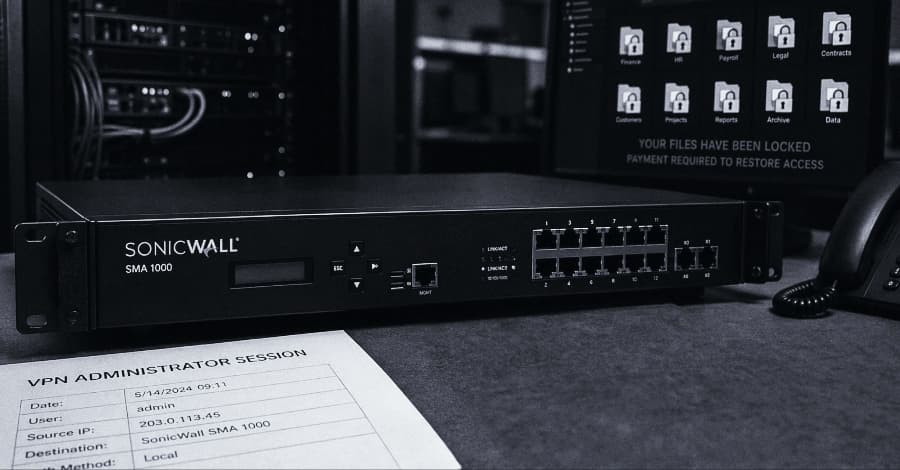
INC Ransomware Emerges as Dominant Actor Exploiting SonicWall SMA 1000 Flaws

The INC Ransomware operation has emerged as the "dominant threat actor" exploiting the recently disclosed security flaws in SonicWall Secure Mobile Access (SMA) 1000 series VPN appliances. In a report published over the weekend, Resecurity said it observed the INC Ransomware accelerating its activity since the beginning of August 2026, listing multiple victims on its data leak site. Per

The Hacker NewsRead original
ExternalCloud
AWS News Blog

AWS Weekly Roundup: Price reduction of GPT models in Bedrock, CloudWatch managed collectors for Prometheus metrics, and more (August 3, 2026)

Last week I had the joy of participating in Amazon’s “Bring Your Kids to Work Day” with my 7 year old son. We commuted together into the New York City office, his first real rush hour train ride, and spent the day exploring how Amazon uses AI, machine learning, and robotics to deliver packages to […]

Amazon BedrockAmazon CloudWatchAmazon S3 Tables
AWS News BlogRead original
ExternalSoftware Engineering
DZone

Five Layers Between Your AI Agent and a Production Outage

Last year, I was working on deploying an agentic AI system to help manage cloud infrastructure at scale. The idea was straightforward: give the agent access to AWS APIs, let it observe infrastructure state, and allow it to take remediation actions autonomously. Scale a deployment here, restart a service there, update a configuration when metrics cross a threshold. What I did not fully appreciate at the time was how differently an AI agent fails compared to a traditional automation script. When a

ExternalCloud
Google Cloud Blog

Cortex Framework v7 is GA: Build agentic workflows without disrupting SAP operations

Businesses want to quickly and safely deploy AI agents to drive revenue, mitigate risk, and optimize capital, all without disrupting mission-critical ERP systems. And to power AI agents, you need more than raw data: You need interoperable data products that act as a single, reusable source of truth, turning cryptic source system records into clear business terms.  Today, we are announcing the general availability of Google Cloud Cortex Framework version 7. This release modernizes your data archi

Data AnalyticsSAP on Google Cloud
Google Cloud BlogRead original
ExternalCloud
Google Cloud Blog

Unifying public and private data: Scale knowledge graphs with Data Commons on Spanner

To make informed decisions, businesses often need to connect their internal data with public reference data, to create a knowledge graph that connects real-world things and their relationships. However, bridging data from public and private worlds has traditionally been complex. Today, we are streamlining these connections with the general availability of Data Commons on Spanner Graph and the preview of the new Data Commons Platform to unify your private knowledge with knowledge graphs from publ

Data AnalyticsSpannerDatabases
Google Cloud BlogRead original
ExternalDevOps
Kubernetes Blog

Gateway API v1.6: TCPRoute and UDPRoute Graduate to Standard

The Kubernetes SIG Network community is thrilled to share the release of Gateway API v1.6.0, which was released on June 30th of this year! Gateway API has become the standard for modern, role-oriented, and expressive service networking in Kubernetes. In previous releases, Gateway API established a production-grade foundation for HTTP and TLS layer 7 traffic. With version 1.6.0, Gateway API takes a major step forward by expanding standard layer 4 protocol routing and introducing cleaner API bound

Kubernetes BlogRead original
ExternalAI
NVIDIA Technical Blog

How to Run Isolated Tenant Kubernetes Clusters on Shared GPU Infrastructure

Running a dedicated Kubernetes cluster per team often results in more isolation than an organization requires. While one cluster can be successfully shared... Running a dedicated Kubernetes cluster per team often results in more isolation than an organization requires. While one cluster can be successfully shared across many teams, the coordination costs increase as the number of teams grows. Challenges include conflicting CRD versions, overlapping RBAC, and no clean way to carve GPU capacity in

NVIDIA Technical BlogRead original

Let’s start with a conversation

Tell us what you’re working on.

An idea, a challenge, or a system that needs to work better. We’ll help you understand the next step.