
Skip to content
HomeInsights

Insights

Ideas for building
better software.

Engineering perspectives on architecture, product development, AI, and the everyday decisions behind useful software.

From the engineering desk

Browse practical articles or follow the latest technology updates.

Subscribe via RSS →

Curated links from external sources — not 360Softy original articles.

ExternalBackend Development
Laravel News

Laravel AI: Get Raw HTTP Responses and Rate Limits

The Laravel AI SDK exposes the provider's underlying HTTP response on $response->raw, so you can read rate limit headers, request ids, and payload fields. The post Laravel AI: Get Raw HTTP Responses and Rate Limits appeared first on Laravel News. Join the Laravel Newsletter to get Laravel articles like this directly in your inbox.

NewsaiLaravel AI Releases
Laravel NewsRead original
External
The Hacker News

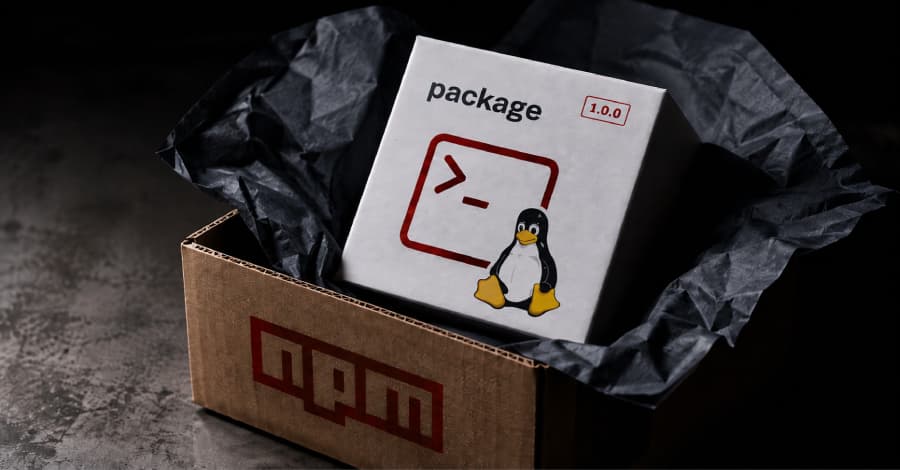
14 Trojanized npm Packages Drop RedC2 4.0 Linux Backdoor With AI-Assisted C2

Cybersecurity researchers have discovered a set of trojanized npm packages that masquerade as working calendar and streak utilities but are engineered to stealthily deliver an artificial intelligence (AI)-powered Linux implant dubbed RedC2 4.0. "When the module loads, it locates the bundled binary, marks it executable, and launches it as a detached background process," TrendAI, Trend Micro's

The Hacker NewsRead original
ExternalSoftware Architecture
AWS Architecture Blog

Build a unified AI agent architecture with DynamoDB and Bedrock

With native vector search in Amazon DynamoDB, you can store vector embeddings alongside your operational data in a single table. This post shows how to build a unified AI agent architecture where an Amazon Bedrock agent uses one DynamoDB table for both structured lookups and semantic search, with a DynamoDB Streams pipeline that keeps embeddings in sync.

Advanced (300)Amazon DynamoDB
AWS Architecture BlogRead original
ExternalSoftware Engineering
DZone

From Bottlenecks to Reliability: A Practical Guide to Scaling Temporal in Production

Temporal is designed to preserve Workflow state through process crashes and infrastructure failures, but durable state does not remove ordinary capacity limits. In production, the control plane can remain healthy while throughput collapses because Worker slots are saturated, Task Queues mix incompatible workloads, or a failover activates a region without enough Worker capacity. Temporal Workers run outside the Temporal Service and execute Workflow and Activity code, so production scalability dep

Let’s start with a conversation

Tell us what you’re working on.

An idea, a challenge, or a system that needs to work better. We’ll help you understand the next step.